
Meyer lemon bitters

Homemade bitters was for me yet another project born of using trash creatively. My friend Kristina’s Meyer lemon tree plus our neighbors’ tree produced a bounty to be squeezed, zested, frozen, and turned into every project under the citrus sun. This station below was a juicing, bitters, limoncello, and seed-saving operation in December.
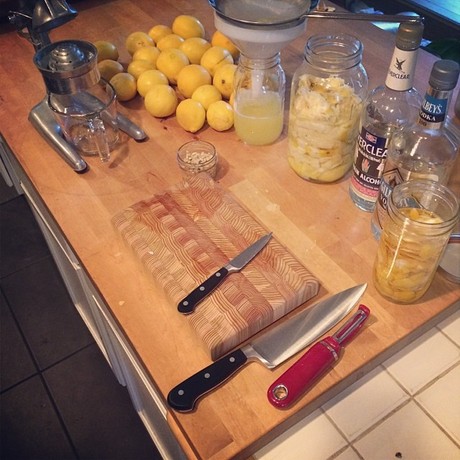
Making bitters was my answer to not just throwing the spent pith and peels in the trash (our compost pile wouldn’t appreciate all that acid). I read up on old-timey bitters and their initial purpose as an elixir for stomach and digestive ailments. This recipe is a modern approximation of herbal and zingy infused bitters with things you can probably find in the bulk section of your grocery co-op. Mountain Rose Herbs is a great place to source roots and barks and all sorts of great herbal items.

Citrus or other tart fruits make a great base flavor. I’ll post the slightly altered spice combo for the batch of grapefruit bitters I’ve currently got going now (after it’s finished and I taste it!). I’ve also used rhubarb and blackberry as the base flavor for bitters with great success.
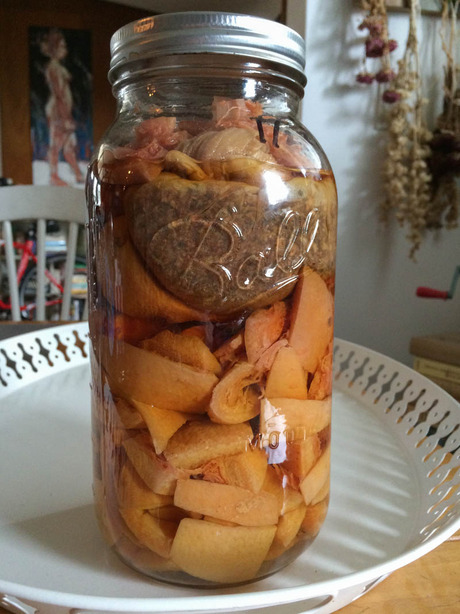
hello, grapefruit bitters

Meyer Lemon Bitters

yields 3-4 cups

1. Make a spice sachet inside a piece of cheesecloth, a small muslin bag, or using a large a paper tea bag:


  • 2 Tbs dandelion root
  • 1/2 Tbs white peppercorns
  • 1/2 Tbs whole allspice
  • 5 juniper berries
  • 5 cloves
  • 1 star anise pod

Feel free to modify these, just try to keep a balance of woody, zingy, and herbal. Chew on dried roots or barks to determine if that’s the flavor you’re going for before investing in this month-long journey of infusion. Drop this spice bag into a 2-quart glass jar.

2. Fill jar with as many organic lemon rinds, pith and spent sections as you can cram in there. Pack them in firmly, pushing them down as you go. I used mostly-zested peels and pith from Meyers because I had them, but any citrus trash is ideal (the remainders after you’ve juiced and zested all you want). Using unzested rinds are fine, too, if you don’t want to freeze fresh zest for future use. Store the seeds in a jar in the freezer to add pectin to future jams.

3. Pour grain alcohol over the the packed jar, pushing the rinds down to ensure the alcohol completely covers the rinds. Cap jar tightly and let sit in a dark place for 1 month.

4. After infusing is finished, the day before you plan to complete the bitters, make a syrup by combining 1/4 cup sugar and 2 Tbs water in a small saucepan. Bring the mixture to a boil and stir to keep the sugar from scorching. Reduce the heat and simmer for 3 minutes. Remove the syrup from the heat, and pour into a small jar with a lid. Let sugar syrup sit overnight at room temperature.

5. Strain out solids from the infusing jar first through a fine wire mesh sieve, and again through a coffee filter. Add the simple syrup to the strained bitters—omitting any sugar crystals that formed overnight. Store the bitters at room temperature away from heat and light in a tightly sealed jar or bottle, where it will keep indefinitely.
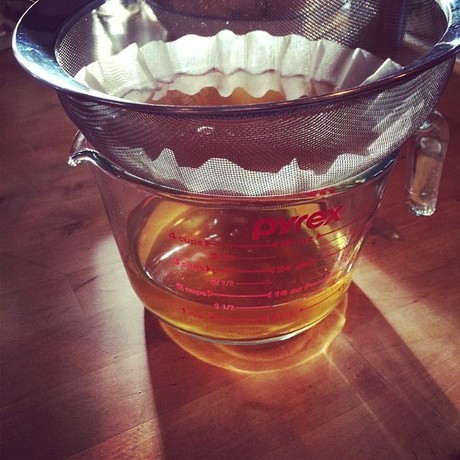
You can also bottle your bitters individually in amber glass dropper bottles and swap them

Sharing the linens love

You may remember my post from last fall, where I asked our community for any spare linens for our dear friends who lost a lot of special stuff when a flood ravaged their South Austin home. Their treasured linens drawer was below the flood line and remained forgotten during the pressing demands of salvage and clean-up.

Well, readers and businesses came to the rescue. Thank you to all of you who shared from your stash, like Lisa from Fillmore Container, the Open Arms Shop and their lovely handmade napkins (a great org that employs refugee women in Austin), and the handful of readers and friends who gave with love.

This bundle of goodies from Marisa of Food in Jars:

These handmade napkins from Melizza:

This brand new, handmade apron from Stephanie at Simply Whimsical Gifts:

Photo courtesy of Stephanie’s Etsy Shop

These lovely words come from Dawna, who shares her family’s feelings about receiving your linens:

Our kitchen is finally completely unpacked, all post flood boxes have been opened, items sorted, hand washed, machine washed, hand washed again, dried and put away. Ten large boxes of unused or rarely used items that were saved sit waiting to be hauled to the thrift store today for donation. As a reward for the labor, this afternoon I will be gently unpacking and oh-ing and ah-ing over the beautiful linens that readers from the Hip Girl’s Guide to Homemaking blog donated.

I saved this batch of beautiful, gifted linens to be opened last. Many times at the temporary house I reached for this bag, hesitated and decided again not to use the contents until we were home. There is something about sorting through linens that soothes my soul and feeds my heart and I knew that I would appreciate the process of unpacking these at our real home, taking my time and putting them into their permanent place.

Cloth napkins are used nightly at the Fisher-Maloney house. Gathering these from the table and taking them to the laundry hamper seems to be the girls’ favorite after dinner chore (perhaps to put off the leftover packing and dish doing for five minutes or so). Countless games of “look what can I turn this napkin into” have been played around our dinner table (look! - I am a robber I have a napkin over my nose and mouth, look - I am a pirate with a napkin on my head tied in a kerchief, look - I am Peewee Herman with a bowtie made out of a napkin…ah - the never ending costume possibilities of the square or rectangular cloth napkin) 

I am certain my love of linens comes from my Grandma Ollie. I remember my Grandma Ollie pulling out cloth napkins for dinner (lunch to you folks not from West Texas), laying each napkin with a fork, knife and spoon in front of each chair surrounding her large eat in table and how I would hope that I would be sitting at the table setting with the napkin that I loved the most. Most often, the seat that I longed for was the one set with the napkin with pink flowers that had been washed so many times the cloth felt like flannel, soft and so thin that it was a wonder how holes had not overtaken the entire thing. My mom, Mary, continued this use of real napkins at my childhood dinner table. She has a kitchen drawer full of napkins and placemats and tablecloths, right next to the drawer full of pot holders and cloth trivets. Each one has a story - some are scratchy and some are soft - I still reach for the soft and threadbare set when asked to set the table.

Thanks, Kate, and thanks to your readers for giving me this moment to look forward to during the rebuild and giving me this moment today. The gifts continue to flow, we continue to heal.